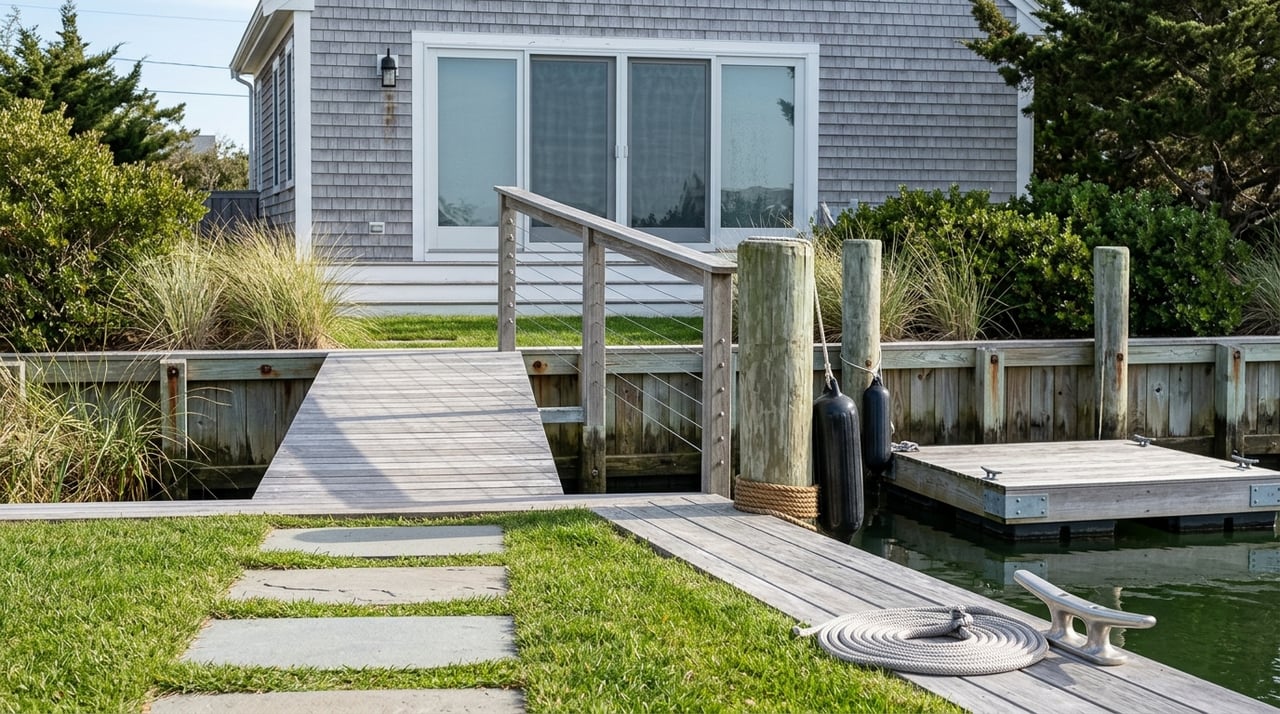
Sag Harbor Waterfront Homes and Docks: Buyer Basics
April 23, 2026
April 23, 2026
If you are buying in Sag Harbor as a boater, a water view is only the starting point. What really matters is whether you can legally, practically, and reliably keep the right boat there. In a harbor this regulated, the details behind a dock, slip, or mooring can shape both your day-to-day use and the property’s long-term value. Let’s dive in.
Sag Harbor is not just a collection of waterfront homes. It functions as a managed harbor system, with rules that affect seasonal dockage, moorings, village marine facilities, and even certain North Haven waters under municipal oversight. According to the Village of Sag Harbor harbor information, the boating season runs from April 1 through October 31, and village services include amenities such as free pump-out service, potable water in the mooring field, and walkable access to the village core.
For you as a buyer, that means boating access has to be looked at in three separate ways: where you can keep the boat, how you can reach it, and whether the setup is legally permitted. In Sag Harbor, those three issues often overlap because the harbor is regulated by designated mooring areas, channel rules, and navigation limits under the village code.
Before you fall in love with a listing description, it helps to understand what type of boating access is actually being offered. Terms like “dock access” or “boat-friendly” can describe very different rights.
Sag Harbor allows a mooring accessory to a waterfront residential use, but the rules are specific. Under the village code, only one mooring is allowed per property, the Harbor Master determines the location and number of moorings, and the boat assigned to a waterfront-residential mooring may not exceed 26 feet.
That matters if you own, or plan to buy, a larger vessel. A private mooring may sound ideal, but it is only valuable if it fits the actual size and use of your boat.
In Sag Harbor, the mooring owner and the boat owner do not have to be the same person. That is one reason shared, leased, or sublet arrangements are common. Still, those arrangements are not informal workarounds. The 2026 mooring regulations state that moorings are not transferable, subletting is permitted only through the Harbor Master, matching village stickers must be displayed on both the boat and mooring ball, and all ground tackle must be inspected every two years by a private contractor.
If a listing mentions a shared mooring, you will want to verify exactly what carries over at closing and what does not. In many cases, the value is in a permit relationship or seasonal arrangement, not a permanent property right.
The village also offers seasonal and transient dockage and moorings through its own facilities. Per the Sag Harbor Harbor and Docks page, village-owned docks require the applicable slip rental or wharfage fee before a vessel may tie up, and rafting is not permitted at village docks or moorings.
This is an important distinction for buyers. A home marketed with nearby dock access may depend on village availability or annual rental arrangements rather than a deeded private dock.
In regulated harbor markets, scarcity often adds value. It also means the cost structure can be very different from what buyers expect.
The village’s 2026 dock-rate resolution lists moorings at $40 per foot for residents and $80 per foot for nonresidents, with a 30-foot minimum. The same schedule lists the outer mooring field at $400 for the season.
Those numbers help frame why legal and usable boating access is a premium feature in Sag Harbor. They also reinforce why you should confirm whether access is deeded, leased, club-based, or permit-based before you assign value to it.
One of the biggest mistakes boating buyers make is focusing only on frontage or the slip itself. In Sag Harbor, the route in and out can be just as important as the place where the boat sits.
According to NOAA’s Coast Pilot, the channel to Sag Harbor Cove is about 8 feet deep, depth near the breakwater is about 6 feet, and the fixed bridge at the entrance to Sag Harbor Cove has about 21 feet of clearance. Sag Harbor harbor-management materials also note that the North Haven/State Route 114 bridge is a fixed structure with 19 feet of vertical clearance and 37 feet of horizontal clearance.
For you, that means draft and air draft both deserve attention. A property may appear ideal on paper, but if your boat cannot clear the bridge or safely navigate the channel, the access is not truly usable.
A waterfront lot can still be a poor fit for boating use. Sag Harbor’s code identifies areas where long-term anchoring or mooring is restricted, including channels, swimming areas, buffer areas, turning basins, and locations within 50 feet of a channel marker, as outlined in the village code.
This is where buyers need to look past the marketing language. A parcel may front the water and still offer limited or impractical boating utility if the legal mooring envelope, channel geometry, or buffer rules do not work for your vessel.
If a property has an existing dock, planned dock work, or a mooring setup, you should confirm more than just whether it exists today. You also need to know whether it is properly permitted and whether future work may require additional review.
The New York State Department of Environmental Conservation explains that many residential docks may be exempt from Protection of Waters permit requirements, but structures in regulated tidal wetland areas still require a tidal wetlands permit. DEC also notes that construction, reconstruction, or repair of docks and moorings on state-owned underwater lands can be exempt only when the proper state lease or approval is already in place, according to the Protection of Waters Program.
In practical terms, that means a dock is not automatically simple just because it is already there. The legal status, maintenance history, and location all matter.
If boating is part of your purchase decision, a careful review before contract or closing can save time and avoid surprises. Here are the essentials to confirm.
Each of these points is grounded in the village rules and DEC guidance cited above. In a harbor market like Sag Harbor, details that seem minor during a showing can become central once you start using the property.
In Sag Harbor, boating access should be viewed as part of a property’s utility, not just part of its curb appeal. The strongest value tends to come from access that is legal, usable, and appropriately sized for the buyer’s boat.
That is why a clear, documented access setup is usually more compelling than a vague waterfront claim. A transferable or well-documented arrangement can support convenience and marketability, while a seasonal, shared, or revocable setup may require more scrutiny under the harbor rules and permit structure described by the village code and the Harbor and Docks page.
If you are buying with boating in mind, the key question is not simply whether the house is on the water. It is whether you can keep the right boat there, reach it without clearance problems, and maintain the setup without permit surprises.
That is where experienced local guidance makes a difference. If you are weighing waterfront homes, dock rights, mooring questions, or village access options in Sag Harbor, Monica Reiner can help you evaluate the details that matter before you buy.
Stay up to date on the latest real estate trends.

When you choose Monica Reiner as your real estate broker, you can be confident that you have a seasoned professional on your side, dedicated to achieving your goals and surpassing your expectations. Contact Monica today to embark on your real estate journey.